

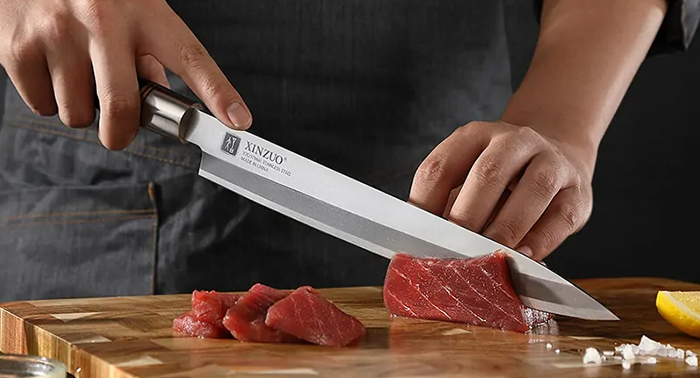
The Art of Japanese Fish Preparation: Choosing Between Sashimi and Yanagiba Knives

Japanese fish preparation is built around precision, clean cuts, and respect for the ingredient. When serving sashimi, the knife is not simply a cutting tool; it influences the texture, appearance, and overall eating experience. Choosing between a general sashimi knife and a traditional Yanagiba requires an understanding of the fish, preparation method, and level of control you want in the kitchen.
Why the Knife Matters
Raw fish shows every detail of the preparation. A rough or uneven cut can crush delicate flesh, release excess moisture, and affect the way the fish feels when eaten. A sharp, specialised knife creates a smooth surface and helps preserve the structure of the fillet.
Japanese fish knives are generally designed to make a single, controlled slicing motion rather than a repeated sawing action. This reduces tearing and allows the cook to produce clean, consistent portions.
Understanding the Yanagiba
A Yanagiba is one of the best-known knives used for preparing sashimi. It typically has a long, narrow blade with a single bevel. The long edge allows the user to draw the knife through the fish in one continuous movement.
The single-bevel design also supports precise angle control. The flat side of the blade faces the food, while the sharpened side guides the cut. This construction requires practice because it behaves differently from a typical double-bevel Western chef’s knife.
If you are considering whether to buy yanagiba knife, think about your preparation habits, sharpening experience, and the type of fish you work with most often.
Choosing Between Different Sashimi Knives
The term sashimi knife can refer to several Japanese knife styles used for raw fish preparation. Yanagiba is the most recognisable option, but other designs may be preferred for particular fish or regional techniques.
Takohiki knives have a straighter blade and are traditionally associated with octopus and preparations from the Kanto region. Fuguhiki knives are thinner and designed for very delicate slicing, including pufferfish preparation by appropriately trained professionals.
For general home use, a Yanagiba may provide the most versatile introduction to traditional sashimi preparation. However, a well-made double-bevel slicing knife may be easier for beginners who are not ready to maintain a single-bevel edge.
Matching the Knife to the Fish
Different fish have different textures, fibres, and levels of fat. Soft white fish may benefit from an exceptionally clean, delicate slice, while firmer fish may require a slightly different angle and cutting pressure.
Fatty fish such as salmon and tuna should be cut cleanly without excessive pressure. A long blade can help create broad, attractive slices, while a shorter knife may offer greater control for smaller portions.
The thickness of the cut also matters. Thin slices may suit delicate fish and certain presentations, while thicker pieces can provide a more substantial texture and mouthfeel.
The Importance of Sharpness
A sashimi knife must be exceptionally sharp. A dull edge forces the cook to apply pressure, increasing the risk of crushing the fish or producing an uneven surface.
Single-bevel knives should be sharpened with stones suitable for their construction. The flat side usually requires careful attention to maintain its contact with the stone, while the bevel needs to be sharpened at the appropriate angle.
Avoid using pull-through sharpeners on specialised Japanese blades. They can remove too much metal and alter the geometry of the edge.
Preparing the Work Surface
The work surface also influences the quality of the finished cut. A stable cutting board with a suitable surface helps protect the blade and keeps the fish secure during preparation.
Wood and high-quality synthetic boards are commonly used for knife work. The board should be large enough to accommodate the fillet and allow a full slicing motion without the blade running off the edge.
Keep the board clean, dry, and free from deep grooves. Wash it carefully after preparing raw fish and follow appropriate food-safety practices to prevent cross-contamination.
Caring for a Japanese Knife
Japanese knives require thoughtful maintenance. Wash the blade by hand with mild detergent, dry it immediately, and store it where the edge cannot contact other utensils.
Never leave a high-carbon blade wet, as moisture can cause staining or corrosion. Even stainless-steel knives benefit from prompt drying and careful storage.
A saya, blade guard, knife block, or secure magnetic storage system can help protect the edge. Do not use the knife for bones, frozen food, or tasks outside its intended purpose.
What About Other Kitchen Knives?
Sashimi knives are designed for raw fish and should not be treated as all-purpose tools. Steak knives, utility knives, and chef’s knives serve different functions and should be selected according to the ingredients and cutting technique involved.
Using the right knife for each task protects both the blade and the food. It also helps cooks develop better control and more consistent preparation habits.
Choose Elite Pro Cutlery
The art of Japanese fish preparation depends on precision, sharpness, and suitable equipment. A Yanagiba offers exceptional control for cooks prepared to learn its single-bevel technique, while other sashimi knife styles may suit different ingredients and experience levels.
Elite Pro Cutlery offers carefully selected Japanese knives and kitchen accessories for serious home cooks and professionals. Contact the team to explore a suitable knife for your preparation style and learn more about maintaining it correctly.


